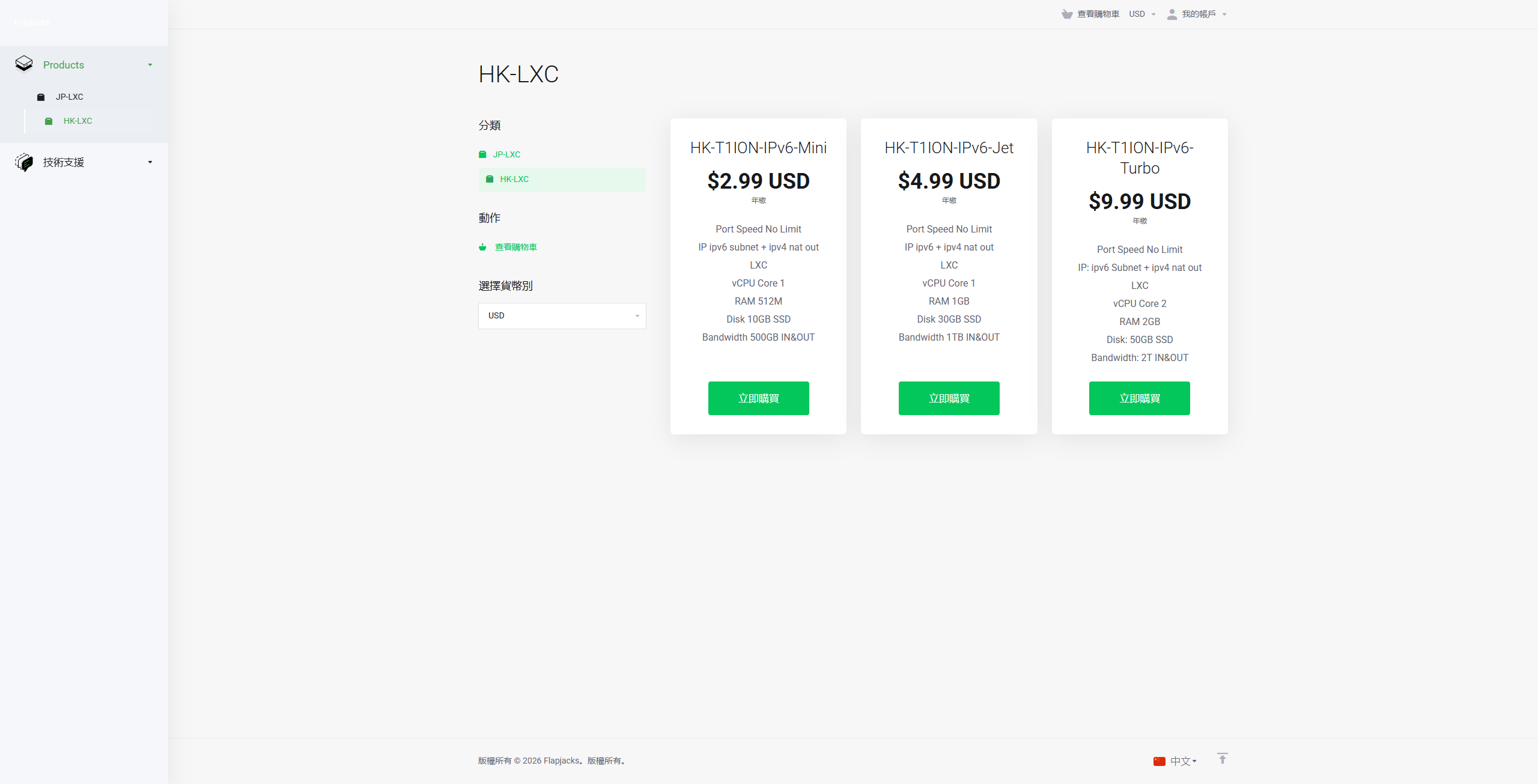
Let’s get straight to the price: $2.99 USD / year. These days that’s about 21 RMB if you pay with Alipay.
I’m in Guangdong, using China Mobile broadband at home. When I first saw this price, my immediate reaction was—could this be a scam? After checking, I found out Flapjacks is a brand under RFCHost. RFCHost has been in the game for several years—it’s not a big company, but definitely not fly-by-night. Even if it did crash, losing 21 RMB wouldn’t hurt. So I decided to give it a try.
I bought the HK-T110N-IPv6-Mini, an LXC container hosted in Hong Kong, installed Debian 12. It’s been running for 144 days now without any hiccups, and the host has had 151 days of uptime with no disconnects or surprises.
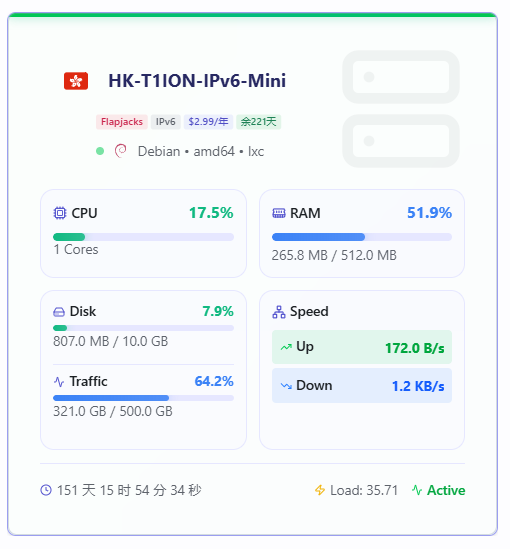
Specs
- 1 CPU core (LXC architecture)
- 512MB RAM
- 10GB SSD storage
- 500GB monthly traffic (both directions counted)
- 1Gbps port
- An IPv6 subnet + NAT-mode IPv4
Purchase link: Provide high quality and performance cloud instance. AFF
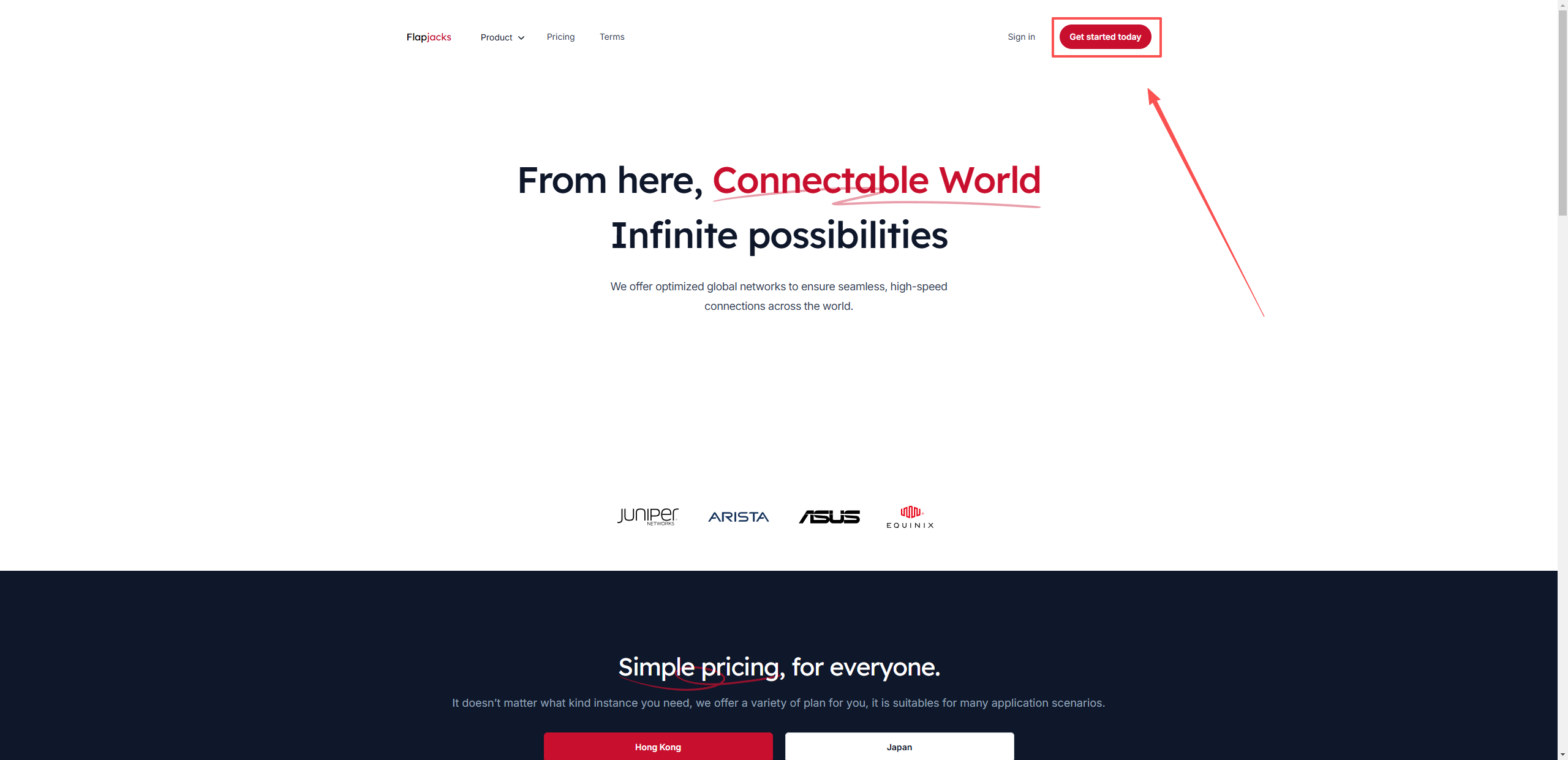
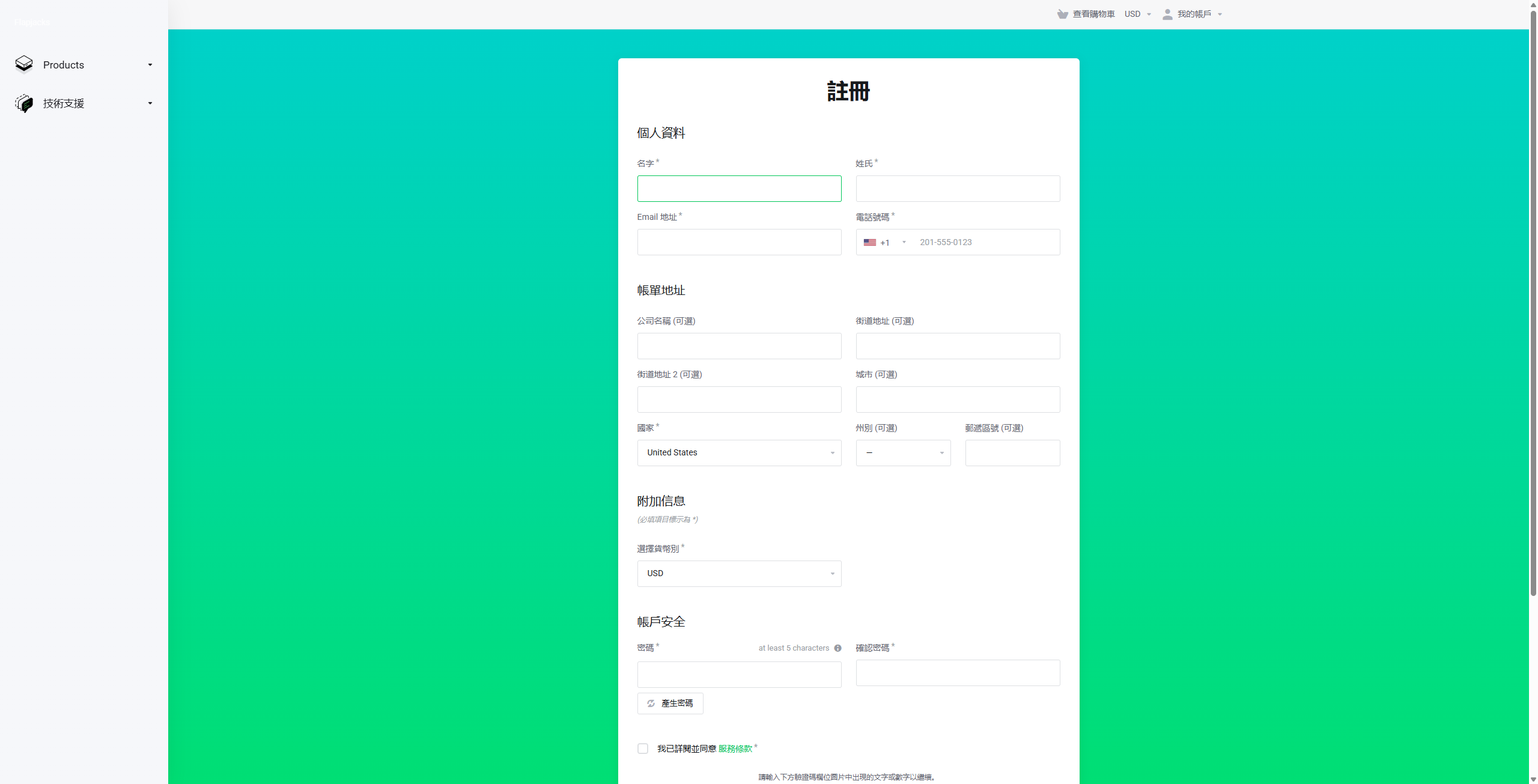
Note: When purchasing, be sure to click on “Get started today” at the top right of the page to register an account—otherwise the page may show “out of stock”. To avoid order fraud, I suggest registering with info generated by this Real Address Generator.

512MB of RAM isn’t much nowadays, but LXC itself is lightweight, and after installing a basic Debian 12 system, I still had 300+ MB left. I’m running HY2 Proxy and Komari Monitor probe on it with memory to spare. This machine isn’t meant for heavy-duty apps—good enough for light daily use.
Network Performance (Guangdong China Mobile)
I’m on Guangdong China Mobile broadband at home, which already gives an edge connecting to Hong Kong nodes. My actual latency is consistently between 25-35ms, even lower than Telecom or Unicom. Over 144 days, YouTube 4K during peak hours has been smooth the whole time, never stuttering or dropping. China Mobile’s route to Hong Kong is generally solid, and this box is no exception.
What surprised me most is the streaming unlock. I only planned to use it as a regular proxy, but it turns out Netflix works, Disney+ works, and ChatGPT is fully accessible. This level of unlocking at this price is a real bonus, and over 144 days it’s always worked—no sudden blocks or loss of access.
But one thing to note: The IPv4 on this plan is NAT mode. That means you don’t get a dedicated public IPv4 address—if you want to access it from outside, you have to use the high port range assigned to you. For example, if you want to SSH into it, you can’t use the default port 22, but must use the mapped port they provide. For outbound proxies/browsing, this has zero effect, since your connections go out. But if you’re running a public website, you’ll have to use IPv6.
My home connection already supports IPv6, so this didn’t affect me. If you don’t have IPv6 at home and want to host a site, this plan isn’t for you.
How reliable is it?
I’ve used it for 144 days, about five months. Aside from a couple times I rebooted it myself, I’ve never had downtime, host crashes, or mysterious disconnects. Latency is smooth and steady, even at peak times. RFCHost’s network backbone is indeed decent—works great for Guangdong China Mobile.
Honestly, a VPS for just 21 RMB a year, running stably for almost five months without a hitch, exceeded my expectations.
Cons also need mentioning: They do not offer refunds. Once you’ve bought the annual Mini plan, that’s it—no trial, no returns. So think carefully before you buy. If you aren’t clear what NAT IPv4 is, or if 512MB RAM truly isn’t enough, you can pay a bit more and get the Jet plan—$4.99 USD per year for 1GB RAM, 30GB storage, and 1TB traffic, which is also great value.
Also, the Mini plan doesn’t take discount codes, but it’s already cheap enough as is.
Who is this suited for?
Recommended for:
- Guangdong China Mobile users looking for a cheap Hong Kong node for streaming—no real competition at this price/performance point
- Need Hong Kong IP to unlock Netflix/Disney+/ChatGPT
- Students or developers on a budget, running scripts, bots, or as a test environment
Not recommended for:
- Need a dedicated IPv4 or want to host a public website (unless you go pure IPv6)
- Need more RAM, want to run Docker or Windows
- Are super-sensitive about data security, and can’t accept shared NAT IPs